


The average cyclist doesn’t get a lot of chances to test tires…they typically ride the tires that come on the bike, then grab whatever’s available at their local bike shop, or what’s on sale online, when those wear out. But one of the most common discussions among riders on long group bike rides is “what tires are you on?”
The connection between a rider and the earth is so much more immediate and important on a bike than in a car that it’s easier to feel the differences; there’s no power steering between you and the tires to deaden the sensations, and, of course, ride comfort dramatically affects butt comfort after a few hours in the saddle. Choose the wrong tires, and a bike can feel numb, sketchy or overly stiff.
Beyond those characteristics, though, is one that’s not as often discussed, and that’s reliability. Simply put, if you take a tire under high pressure with a lot of weight on it and run it over a nail, staple, piece of glass, or sharp-edged piece of rock, the foreign object is likely to penetrate it. Most of the time, the natural flexing of the tire will spit the nasty back out; if you look carefully at the tread of an older pair of tires, you’ll see innumerable small cuts. Particularly as the tread wears over time, those cuts become uncomfortably close to the casing of the tire, the last line of defense between the tube, the sharp object, and the psssssssssss that signals, at best, a break in your ride, time spent repairing/replacing the tube, getting your hands filthy and messing up that white bar tape you just put on . . . At worst, it can mean a lot of walking the bike, hitchhiking, or hoping your sweetheart is answering the cell phone and can come pick you up.
A few years ago, I had what’s best described as “one of those summers.” A total of 12 flats, two tires slashed to the point of needing replacement, and a ridiculous amount of time wasted/rides ruined; I was ready for a change. As a racer, my focus had always been on the lightest, grippiest tire available; but was there something out there that would be light and fast AND reliable?
A handful of tests later, I wasn’t all that excited. Most of the major companies were putting flat protection on their lower end tires, which meant heavier tires and less grip. In addition, the extra layer of casing led to a less supple feel. Given that the greatest need for flat protection is on rough roads, it was almost a Catch-22; put on tires that would allow me to enjoy a ride without flats, then hate the ride because the bouncing was painful. Great. I borrowed a friend’s Continental “Gatorskin” tires; they felt fine at first ride, but with a price tag of $65 each, they’re a stretch on most wallets (including mine), so unfortunately weren’t an option.
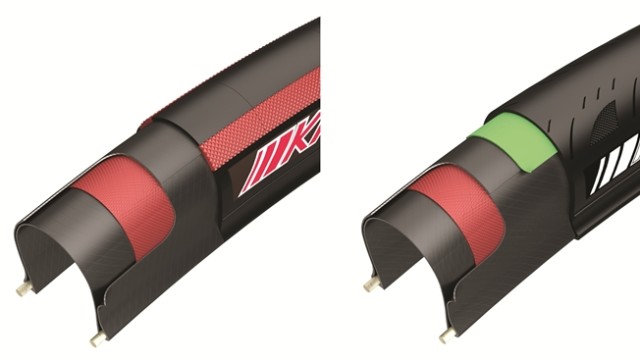
Clearly, I wasn’t getting to where I wanted to go, literally or metaphorically. Then, a breakthrough. Testing of the Kenda Small Block 8 cyclocross tire revealed a supple casing that flowed over terrain and helped make up for some of my bike handling deficiencies. Yet, the Small Block 8 also had Kenda’s “Iron Cloak” flat protection system. That raised several questions; would the suppleness disappear in a smaller road tire casing, would Kenda’s tire technology allow for a light enough tire with enough grip to make it a serious alternative to the big boys…and, frankly, would the Iron Cloak actually work, or is it just hype?

Might as well try the worst case scenario first, right? So, I put a pair of Kenda’s lightest tires, the Kalientes, on my lightest wheels. Rated to weigh in at 190 grams, they actually came in at 205; still, that’s competitive with some of the lightest racing tires out there. And, immediately it was clear that they were NOT excessively stiff; in fact, ride quality was on a par with the Hutchinson racing tires I’d been using. Even more surprising, given that they were nearly half the price, was the road feel; rock solid on descents, grippy and predictable in corners. Very confidence inspiring, and after a good part of the summer on them as racing and training tires, treadwear was reasonable. Around 1500 miles into them, they still hadn’t developed the wide flat spot, which to me signals the time to get rid of them as it compromises handling and increases road friction.
Better still…not a single flat! Now, that’s anecdotal; it IS possible to go through a season without getting any flats. But, I HAD been on multiple group rides where one or more people had flatted out, and had been aware that I’d ridden over glass several times. Not bad.
With fall and winter riding coming, I wanted to switch over to a tire with a bit more beef to it; the roads get worse, they’re wet more often (you get more flats when it’s wet, for two reasons; one, things stick to your tires longer, and two, you can’t see and avoid bits of glass), and changing a tire when it’s below freezing or in a November rain is just plain miserable. So, I switched to the Kenda Kriteriums. Still a light tire, they’re designed more for the rough city road characteristics of a criterium race than the ultralight Kalientes, which are geared more toward long road races with lots of climbing. And, their handling characteristics were remarkably similar to the Kalientes; I was immediately comfortable on them.
A winter later, nothing had changed my opinion…and still no flats. With the Tour of the Battenkill race coming up and my comrades who had done it before strongly recommending larger tires, I switched over from the set of 700x23s to 700x25s. That allowed me to run lower pressures, which made the back roads of the Battenkill race more comfortable (and when you’re comfortable on dirt roads, you go a LOT faster). The Kriteriums performed beautifully, still rolling fast on the pavement, but soaking up the worst bumps and giving me traction that allowed me to make up time on faster riders in the dirt sections. My finish was better than I’d expected, even given that one of my teammates had dropped his chain in a climb, which meant leaving the group I was in and going back to help him.
With that much personal experience on the tires, and all of it positive, it was time to see what other riders would think. We put two other people on Iron Cloak equipped tires; one woman rider who tends to do group rides (group rides are a worst case scenario for flats, as you can’t see or avoid glass, nails, or anything else in the road), and one commuter. Feedback was identical to mine…the tires felt great, and zero flats, period.
Long story short…at this point, I’m at nearly 3 years on Kenda tires with Iron Cloak, and among the three riders, there’s probably around 5000 miles on them. The score? Three flats in total, all pinch flats, which are caused by hitting objects that cause the tube to get caught between the tire and the rim. NO tire can stop that from happening. Other than that…zero flats. Now, I’m not cocky enough to think they’re foolproof; hitting a nail or tack straight on is still likely to cause penetration, and a long piece of glass or sharp metal edge could still slash the tire. But short of that, these things are the most durable tires I’ve ever used.

While all of that testing was going on, Kenda decided to up the protection game with the Kriterium Endurance; basically, take the Kriterium and add yet another layer of protection along the tread. Winter riding season was almost upon us, so I decided to give them a try. The 700×23 turned out to be difficult to mount on my wheels; the added stiffness created by the belt made it hard to get the tube inside the casing, and the casing definitely appeared to be smaller than a normal 700×23. Also, the ride quality definitely deteriorated. At the pressures I need to run to avoid pinch flats, they had a feel more like other, less appealing, tires with flat protection. The 700×25, on the other hand, was much easier to work with; and, running them at a slightly lower pressure gave them much the same feel as the standard Kriteriums. Our recommendation? If you’re a lightweight (say, under 140 pounds) and can run 90 psi in the 700×23, fine…but if you’re heavier, head straight for the 700×25. It’s slightly heavier (the 25 came in at 295 grams), but these AREN’T race tires…they’re training tires with similar handling characteristics to the ones you WOULD race. If I spent more of my time riding in urban environments with lots of road debris, these would be my first choice for daily riding.
Are the Iron Cloak tires the only ones out there with flat protection? Nope…there are plenty of others now. Will the others work better or worse? Only testing will tell. The most important point, though, is that knowing there are tires that help you avoid flats without a major weight penalty or compromising ride and handling significantly means that there’s no reason to buy tires without that extra security. The cost savings in tubes alone can be relatively large, and the savings in time and shredded nerves from not having to fix a flat in lousy conditions, or try to thumb a ride home with a pair of flats, is beyond price. I’ve definitely been enjoying having that worry lessened; let’s hope it works that way for you!

UPDATE: While riding this spring, I had an SUV pull out in front of me from a side street as I came down a hill at 20+ mph. I put the bike sideways trying to avoid him, and utterly shredded both tires, particularly the rear one. Yet, as I came to a stop still upright, the Iron Cloak belt prevented a blowout and what would have been at best a painful high-side crash into the side of the vehicle. There is no question in my mind that the Iron Cloak saved me from pain, possible broken bones, or even worse. I had thought of it as a convenience, keeping me from having to stop and repair flats; I now consider flat protection in bike tires to be a safety feature, as well. Unless you’re a professional racer, our belief at this point is that it’s worth the extra weight, period…most of us could lose a few ounces and make up the difference!